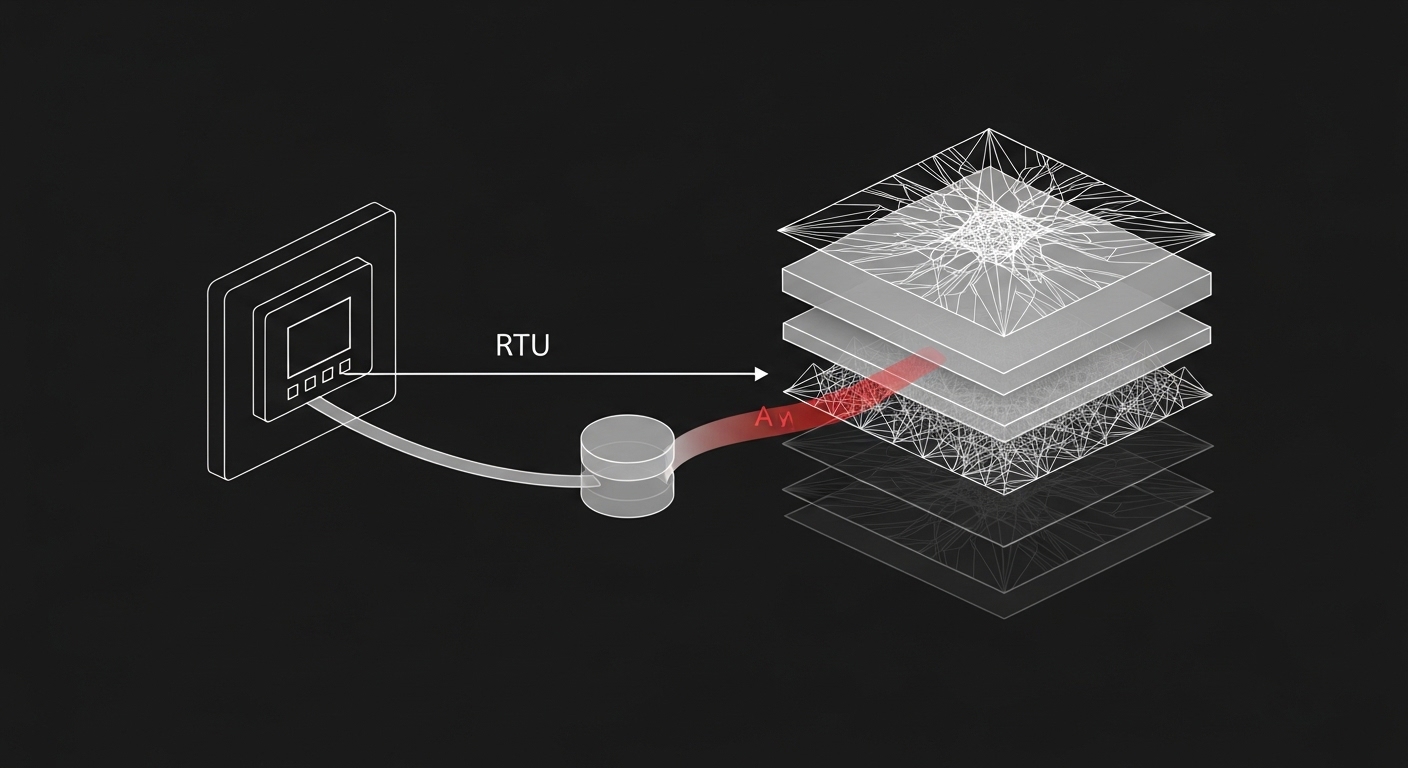
The Physical Process Sentinel: Machine Learning for Detecting Stealthy Cyber-Physical Attacks on Grid RTUs
Apex Insights Research Desk
Introduction: The New Battlefield at the Grid Edge
The operational stability of modern energy grids is predicated on the integrity of real-time data flowing from countless field devices. At the vanguard of this data acquisition are Level 0/1 Remote Terminal Units (RTUs), the digital sentinels translating physical-world phenomena—voltage, current, phase angle, breaker status—into actionable intelligence for SCADA systems. However, this critical interface between the physical process and the digital control plane has become a primary target for sophisticated threat actors. The challenge has evolved beyond traditional IT-centric attacks; we are now contending with stealthy cyber-physical attacks designed to manipulate the underlying physical process by injecting carefully crafted, malicious data that masquerades as normal operational states.
These low-and-slow attacks render signature-based intrusion detection systems (IDS) and simple threshold-based alerting mechanisms ineffective. An attacker might subtly alter sensor readings over time to mask a larger destabilization effort or spoof actuator statuses to mislead grid operators, culminating in physical damage or widespread outages. To counter these advanced threats, the industry is pivoting towards behavioral anomaly detection, leveraging machine learning (ML) to establish a high-fidelity baseline of normal RTU operations and identify minute deviations indicative of a compromise. This research bulletin provides an engineering analysis of the ML algorithms most effective for this task, examining their architectural implications and implementation challenges in brownfield grid environments.
The Anatomy of a Stealthy RTU Attack
To select an appropriate ML algorithm, one must first deeply understand the threat model. Unlike brute-force denial-of-service attacks, stealthy cyber-physical campaigns against RTUs are defined by their subtlety. The adversary possesses a degree of process knowledge, allowing them to construct malicious payloads that do not immediately violate coarse operational thresholds. For example, instead of reporting a voltage of zero, an attack might incrementally shift the reported value by 0.5% every few minutes—a change that is individually insignificant but collectively masks a developing voltage sag.
These attacks exploit the inherent noise and variability of power systems. The goal is to make the malicious signal statistically indistinguishable from the natural stochasticity of the grid. The data vector from a single RTU can be high-dimensional, comprising dozens of correlated time-series variables. A successful attack will manipulate these variables in a coordinated fashion that respects their physical interdependencies (e.g., ensuring manipulated current and voltage readings still conform to Ohm's law within a plausible range). This is precisely where traditional security tools fail and where ML's ability to learn complex, non-linear, multi-variate correlations becomes indispensable. The objective is to move beyond signatures and architecting zero-day resilience for Level 0/1 power grid ICS by building models that understand the physics of the system through its data.
Evaluating Machine Learning Algorithms for High-Fidelity Anomaly Detection
The core of the challenge lies in learning the intricate patterns of a