The Uninterruptible Mandate: Architecting Real-Time Zero-Trust Micro-segmentation for Brownfield ICS
Apex Insights Research Desk
The Core Dilemma: Securing Brownfield OT Without Disrupting Deterministic Processes
The imperative to secure industrial control systems (ICS) and operational technology (OT) is no longer a theoretical exercise. Yet, for organizations operating sprawling, heterogeneous brownfield environments, the path to robust security is fraught with peril. These networks—often a complex amalgam of multi-generational hardware, proprietary protocols, and latency-sensitive processes—were architected for availability and reliability, not security. The central engineering challenge is therefore monumental: How can an organization superimpose a modern, granular security model like Zero-Trust micro-segmentation onto a legacy industrial fabric without triggering a catastrophic loss of production uptime?
The traditional IT approach of deploying intrusive agents or implementing disruptive network-wide changes is a non-starter in OT. A single dropped packet or a few milliseconds of added latency can cascade into process faults, equipment damage, or safety incidents. The foundational principles of OT—determinism and availability—must remain inviolable. This reality demands a fundamentally different architectural philosophy, one that is surgical, non-intrusive, and prioritizes operational continuity above all else. This article from the Apex Insights Research Desk presents an engineering blueprint for implementing real-time, context-aware Zero-Trust micro-segmentation strategies in live brownfield environments, ensuring the cure is not worse than the disease.
Moving Beyond the Brittle Purdue Model
For decades, the Purdue Model served as the de facto standard for ICS network architecture, relying on macro-level segmentation to create zones and conduits. While foundational, this perimeter-based approach is insufficient for modern threats. Once a perimeter is breached, an attacker often has unfettered lateral movement within a flat Level 1 or Level 2 network, able to reach dozens or hundreds of critical controllers. Zero-Trust micro-segmentation shatters this paradigm.
The core tenet of Zero Trust, as defined by NIST SP 800-207, is to "never trust, always verify." In an OT context, this translates to eliminating the concept of a trusted internal network. Every communication flow—from an HMI to a PLC, from a sensor to a historian, or between two controllers—must be explicitly authenticated, authorized, and inspected based on a granular policy, regardless of its origin.
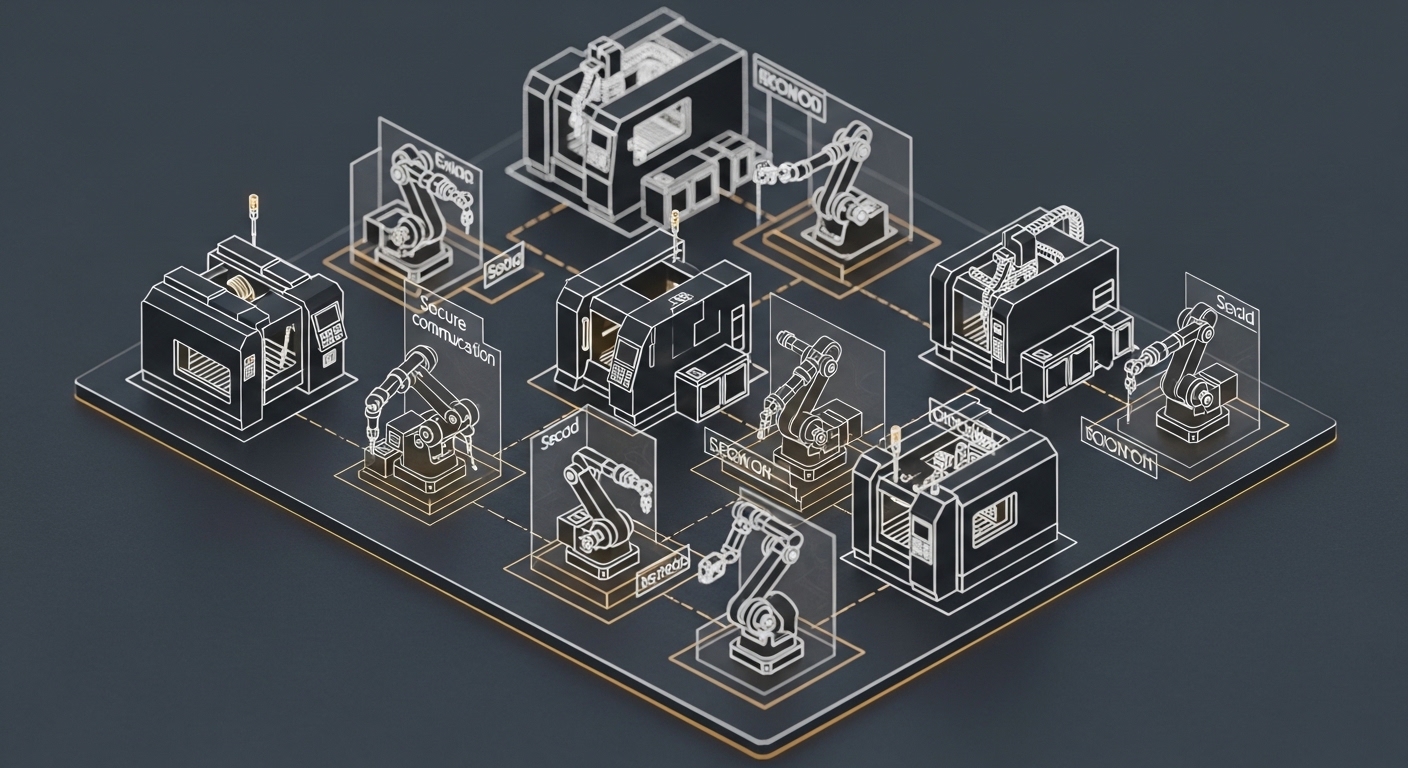
Micro-segmentation is the enforcement mechanism for this principle. It involves creating infinitesimally small, software-defined perimeters around individual assets or small, functional groups of assets (e.g., a single work cell or production line). This creates a security posture where a compromised HMI cannot communicate with any PLC other than the specific ones it is explicitly authorized to manage for a specific function at a specific time. The attack surface is drastically reduced, and lateral movement is effectively contained.
An Architectural Blueprint for Zero-Downtime Implementation
Deploying micro-segmentation in a live brownfield environment without impacting uptime requires a meticulous, phased methodology rooted in deep visibility and risk mitigation. A "big bang" cutover is an invitation to disaster. The following four-phase blueprint ensures a gradual, verifiable, and non-disruptive transition.
Phase 1: Deep Passive Discovery and Deterministic Baselining The foundational phase is about achieving complete, unambiguous visibility into the existing OT network. This cannot be accomplished with active scanning, which can crash brittle legacy devices. Instead, deployment relies on passive monitoring via network TAPs or SPAN/mirror ports connected to an OT-aware deep packet inspection (DPI) engine. The objective is to build a high-fidelity inventory and communication map, including:
- Asset Inventory: Identify every device (PLCs, RTUs, HMIs, VFDs, engineering workstations), including vendor, model, firmware version, and hardware specifics.
- Communication Flow Mapping: Diagram every single connection, detailing the source, destination, protocol (e.g., Modbus/TCP, S7comm, EtherNet/IP, PROFINET), and specific commands or function codes used.
- Deterministic Pattern Analysis: Establish a baseline of normal operational behavior. This includes understanding PLC scan cycle times, expected communication frequencies, and the precise sequence of commands required for a given process. This baseline becomes the foundation for anomaly detection and policy creation.
Phase 2: Policy Modeling and Impact Simulation With a comprehensive network baseline, the next step is to model the desired micro-segmentation policies in a virtual environment. Before a single rule is enforced, security and control engineers must be able to simulate the impact of every proposed policy against live or recorded network traffic. A robust simulation engine will answer critical questions: Would this rule block a critical safety interlock communication? Does this policy interfere with the real-time data exchange required for coordinated motion control? This critical simulation phase is the essence of a truly non-disruptive Zero-Trust micro-segmentation strategy for live ICS environments. Any policy that generates a simulated alert for blocking legitimate traffic must be refined before moving to enforcement. This iterative process de-risks the entire project.
Phase 3: Phased, Ring-Fenced Enforcement Once policies are validated through simulation, enforcement begins—but never all at once. The principle of phased rollout is paramount. Start with the least critical segment of the plant, such as a development system or a non-production line.
- Create the first micro-segment or "enclave" around this small group of assets.
- Apply the pre-validated policies in enforcement mode.
- Closely monitor the process and associated KPIs (Overall Equipment Effectiveness, cycle times, error rates) for any deviation from the established baseline.
- Once stability is confirmed over a defined period, gradually expand the enforcement footprint, moving from less critical to more critical systems in a ring-fenced approach. This methodical expansion contains the blast radius of any potential misconfiguration.
Phase 4: Integration for Context-Aware Dynamic Policy Static policies are a starting point, but true Zero Trust is dynamic and context-aware. This final phase involves enriching the segmentation platform with external context to enable adaptive policies. This requires API-level integration with other systems of record:
- CMMS/Asset Management: To verify that a device attempting to connect is a known, managed asset with the correct firmware.
- Identity and Access Management (IAM): To grant specific engineers access to specific PLCs only during scheduled maintenance windows.
- MES/SCADA: To understand the current process state. For example, a policy could automatically tighten to block all firmware updates to controllers while a production batch is running. This ability to dynamically shift security posture based on operational reality is the cornerstone of architecting dynamic Zero-Trust policy for heterogeneous legacy OT, moving security from a static gatekeeper to an intelligent, integrated component of the control system itself.
Practical Implementation Challenges
Executing this blueprint requires overcoming significant technical engineering hurdles specific to brownfield OT environments.
Latency and Jitter in Deterministic Networks: In-line security enforcement points, whether physical appliances or virtual gateways, inevitably add latency. While a few milliseconds may be irrelevant in IT, it can be catastrophic for real-time control networks like PROFINET IRT, Sercos, or EtherCAT, which operate on sub-millisecond cycles. Introducing unpredictable jitter can desynchronize controllers and halt production. The solution demands either specialized enforcement hardware utilizing FPGAs for line-rate processing or an architecture that places enforcement at network aggregation points, outside the ultra-low-latency critical path between a controller and its I/O. Navigating this challenge is central to creating a blueprint for latency-free Zero-Trust on EtherCAT networks and similar deterministic protocols.
Protocol Brittleness and Lack of Session State: Many legacy OT protocols, such as Modbus/TCP or OPC-DA, are notoriously brittle and lack modern security features. They were designed for simplicity and efficiency in isolated networks. A DPI engine must have an extremely precise understanding of each protocol variant and its valid function codes and data ranges. An improperly configured policy that blocks a seemingly benign but critical
READ_HOLDING_REGISTERScommand could silently degrade process visibility until a failure occurs.The Multicast and Broadcast Problem: Industrial protocols like EtherNet/IP and PROFINET rely heavily on Layer 2 broadcast and multicast traffic for device discovery, I/O connection establishment, and synchronization. A naive micro-segmentation policy that blocks all broadcast traffic by default will instantly break these systems. Policies must be architected with protocol-specific intelligence, allowing necessary discovery and session traffic within a defined segment while preventing it from propagating across the wider network.
Proprietary Protocols and Engineering Obscurity: The most challenging assets to segment are often the "black boxes" from obscure vendors or legacy systems running undocumented, proprietary protocols. Passive discovery tools may categorize this traffic as "unknown." Securing these assets requires a laborious process of manual traffic capture, baseline analysis, and collaboration with veteran control engineers to infer the logic of the communication. Policies for these systems must often start with a broad "allow" rule based on the observed baseline, with alerts triggered on any deviation.
Conclusion: From Theory to Resilient Operation
Implementing real-time, context-aware Zero-Trust micro-segmentation in brownfield ICS is not a product installation; it is a complex systems integration and engineering endeavor. It requires a profound respect for the operational realities of industrial environments and a steadfast commitment to a non-disruptive methodology. By prioritizing passive discovery, exhaustive simulation, and a phased, risk-averse enforcement strategy, organizations can fundamentally transform their security posture. They can move from a fragile, perimeter-defended architecture to a resilient, granularly controlled system where trust is never implicit and every communication flow is explicitly validated. This is the uninterruptible mandate: achieving modern security without compromising the deterministic heartbeat of industrial production.
Sources / References
- NIST Special Publication 800-82 Rev. 3 (Draft), Guide to Operational Technology (OT) Security: https://csrc.nist.gov/publications/detail/sp/800-82/rev-3/draft
- ISA/IEC 62443 Series of Standards, Security for industrial automation and control systems: https://www.isa.org/standards-and-publications/isa-standards/isa-iec-62443-series-of-standards
- CISA, Recommended Practice: Securing Industrial Control Systems: https://www.cisa.gov/resources-tools/resources/securing-industrial-control-systems-recommended-practice