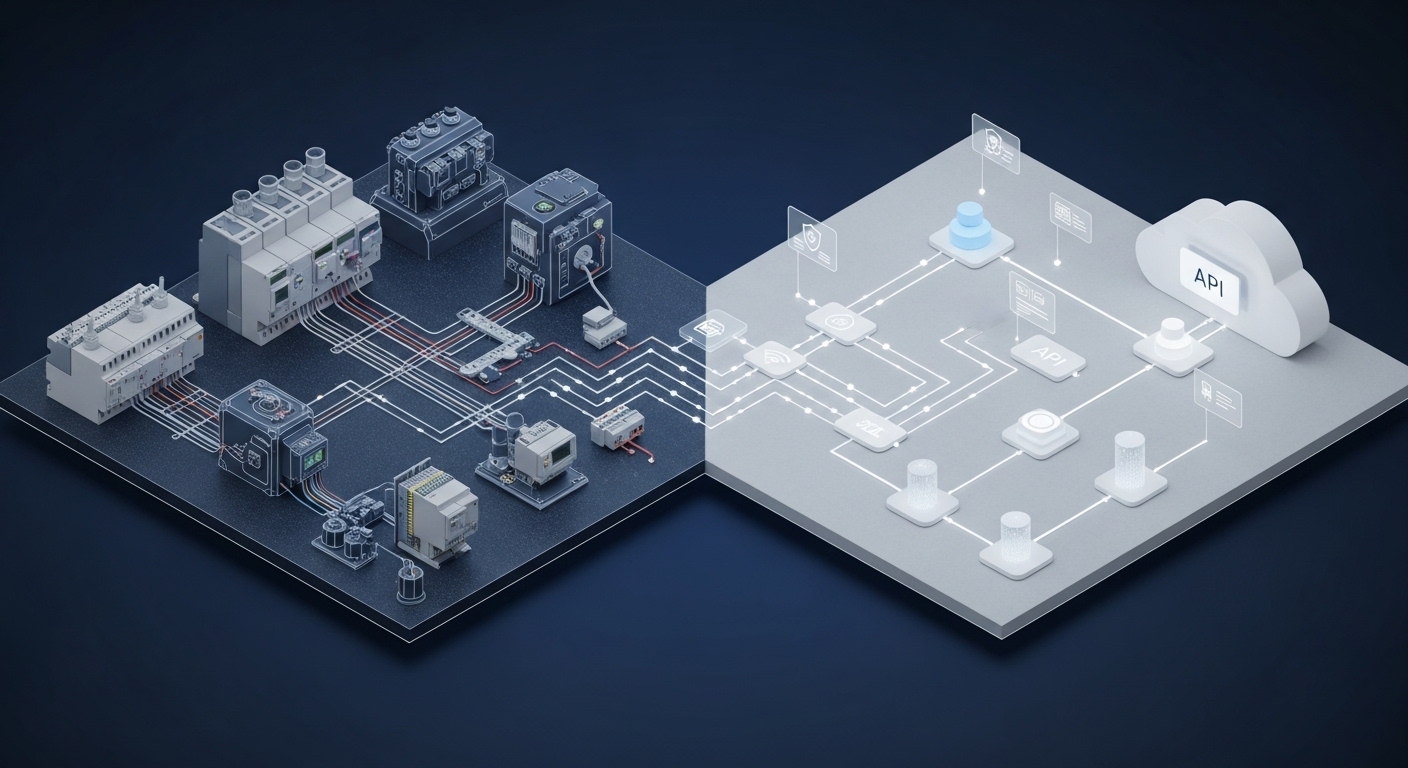
The Converged Mandate: Architecting Zero-Trust Across Multi-Site OT and Cloud Ecosystems
Apex Insights Research Desk
Introduction: The New Architectural Imperative for Critical Infrastructure
The attack surface of multi-site critical infrastructure has undergone a paradigm shift. Geographically dispersed operational technology (OT) environments—from remote electrical substations to sprawling manufacturing facilities—are no longer isolated, air-gapped fortresses. The imperative for data-driven optimization, predictive maintenance, and centralized oversight has driven convergence with IT and cloud-native frameworks. This fusion, while operationally beneficial, creates a complex and perilous security challenge: how to enforce a consistent, granular, and verifiable security posture across a hybrid ecosystem of brittle legacy protocols and modern, ephemeral cloud services. The traditional perimeter security model is demonstrably obsolete. The only viable path forward is a meticulously engineered Zero-Trust architecture.
This analysis from the Apex Insights Research Desk dissects the core strategies for enforcing Zero-Trust across multi-site critical infrastructure. We move beyond theoretical frameworks to detail the architectural patterns, enabling technologies, and significant engineering hurdles involved in integrating legacy proprietary protocols like Modbus, DNP3, and PROFINET with robust, cloud-native identity and policy management systems. The objective is not merely to connect these disparate worlds but to subject every interaction—from a sensor reading to a cloud-based policy update—to the rigorous principle of "never trust, always verify."
Deconstructing the Core Challenge: The OT/Cloud Impedance Mismatch
The foundational challenge lies in the profound impedance mismatch between the deterministic, stateful world of OT and the stateless, API-driven nature of cloud environments. OT networks are governed by the laws of physics; they demand low-latency, jitter-free, and highly reliable communication to ensure process safety and integrity. The protocols that underpin these environments were designed for functionality and efficiency within isolated networks, not for the hostile, interconnected landscape of today.
Legacy protocols such as Modbus/TCP or EtherNet/IP lack fundamental security primitives. They have no concept of user or device identity, no native encryption, and no mechanism for authenticating commands. A raw packet containing a WRITE_SINGLE_COIL command is treated as inherently trustworthy, a dangerous assumption in a converged network. This protocol-level vulnerability is precisely why successful threat mitigation hinges on strategies like non-disruptive anomaly detection for proprietary OT protocols, which can identify malicious commands even when they are syntactically valid. Applying a standard IT-centric Zero-Trust solution—which might rely on endpoint agents or TLS-based identity—is a non-starter. You cannot install an agent on a 20-year-old PLC, and forcing protocol-level TLS handshakes would introduce unacceptable latency, violating the deterministic requirements of the control loop.
This chasm is widened by the multi-site dimension. When remote sites are connected via wide-area networks (WANs)—often a mix of MPLS, cellular, and satellite links—the challenges of latency, bandwidth constraints, and intermittent connectivity become first-order architectural concerns. A centralized policy enforcement model that requires every OT packet to traverse the WAN to a cloud-based policy engine for authorization is operationally infeasible.
The Architectural Blueprint: A Federated, Edge-Enforced Zero-Trust Model
A robust Zero-Trust architecture for this environment must be federated in nature, centralizing policy and identity management while decentralizing enforcement to the industrial edge, as close to the protected assets as possible. This hybrid model respects the operational constraints of OT while leveraging the scalability and intelligence of modern security frameworks.
Identity Abstraction and Federation Plane: Since legacy OT devices lack inherent identity, one must be superimposed. This is achieved not at the endpoint, but at the network layer. A segmentation gateway or industrial firewall fronting a PLC or RTU becomes its identity proxy. This proxy is bootstrapped with a strong, verifiable cryptographic identity (e.g., an x.509 certificate via a TPM or a SPIFFE Verifiable Identity Document). This OT identity can then be federated with a central Identity Provider (IdP), allowing modern cloud services and authorized remote users to authenticate and request access to the legacy asset through a unified identity plane.
Policy Decision Point (PDP) and Policy Information Point (PIP): The 'brain' of the operation—the PDP—resides in a secure, centralized location, which could be a corporate data center or a dedicated cloud tenant. It is responsible for evaluating access requests against granular policies. These policies are not simple IP-based ACLs; they are rich, attribute-based access control (ABAC) rules: "Allow user 'maintenance_engineer_jane' from group 'SCADA_Admins' using a corporate-managed device to issue Modbus Function Codes 1-4 to asset 'PLC-PumpStation-7' between 2-4 PM on Tuesday." The PDP is fed real-time context from Policy Information Points (PIPs), which provide data on device posture, threat intelligence feeds, and operational schedules.
Distributed Policy Enforcement Points (PEPs): This is the most critical component. PEPs are deployed at the edge of each site or even at a deeper micro-segment level within a site. These are intelligent, protocol-aware gateways that receive condensed policy sets from the PDP. The PEP's role is to enforce these policies on the actual OT data plane with microsecond-level latency. When a packet arrives from an HMI destined for a PLC, the PEP intercepts it, performs deep packet inspection (DPI) to understand the specific command (e.g., read vs. write), validates the cryptographic identity of the source, and evaluates the action against its local policy cache. Enforcement is immediate and does not require a round-trip to the central PDP for every packet.
Decoupled Control and Data Planes: The network architecture must rigorously separate the control plane (policy distribution, identity synchronization, telemetry) from the data plane (OT process traffic). The control plane can operate over a secure overlay network (e.g., WireGuard, SD-WAN) using modern, secure protocols like gRPC or HTTPS. The OT data plane, however, remains confined within its micro-segment, with the PEP acting as the sole, explicit gatekeeper for all ingress and egress traffic. This design ensures that a compromise in the IT environment cannot automatically pivot to the OT data plane.
The guiding principle for this architecture is derived from the Purdue Model, adapted for Zero-Trust: policy is defined and managed at higher levels (IT/Cloud), but it is enforced with deterministic fidelity at the lowest possible level (the OT edge), directly adjacent to the industrial process itself.
Practical Implementation Challenges
Translating this architectural blueprint into a functioning system is fraught with deep engineering challenges that require specialized solutions.
Deterministic Latency and Jitter: The processing overhead of DPI, cryptographic verification, and policy lookup within a PEP can introduce latency and, more critically, jitter (variability in latency). For high-speed control systems like turbine governors or motion control, even a few milliseconds of jitter can lead to process instability. PEP hardware and software must be optimized for real-time processing, often requiring FPGA acceleration for DPI and highly efficient policy lookup algorithms.
Identity Provisioning and Lifecycle Management: Securely bootstrapping and managing cryptographic identities for thousands of 'un-manageable' brownfield devices is a monumental task. This involves solving the 'secure introduction' problem: How is the initial trust between the PEP and the central identity management system established at a remote, physically insecure site? Solutions often involve a combination of hardware roots of trust (TPMs in edge gateways), trusted supply chain practices, and manual out-of-band verification processes.
WAN State Synchronization and Resiliency: Maintaining policy consistency across dozens or hundreds of sites connected by unreliable WAN links is a distributed systems problem. If a remote site loses connectivity to the central PDP, its PEP must continue to enforce the last known good policy (a 'fail-secure' state). When connectivity is restored, the PEP must be able to efficiently synchronize any policy deltas without disrupting operations. This is a significant hurdle when architecting deterministic Zero-Trust for legacy Rockwell ControlLogix across multi-site WANs, where CIP traffic is highly sensitive to network conditions.
Non-IP and Layer 2 Protocol Segmentation: A significant portion of OT traffic, particularly at Level 1 and 0 of the Purdue model, does not use the routable IP protocol. Protocols like PROFINET IRT, SERCOS, and Modbus RTU (over RS-485) operate at Layer 2 or the physical layer. A standard Layer 3 firewall or PEP is blind to this traffic. Enforcing Zero-Trust here requires specialized gateways that can intercept and police serial or Layer 2 communications, effectively creating micro-segments in what was previously a flat, unroutable domain. This presents one of the primary technical barriers to Zero-Trust micro-segmentation in non-IP OT networks.
Conclusion: Towards a Resilient, Abstracted Security Fabric
Enforcing Zero-Trust across multi-site critical infrastructure is not about finding a single product or technology. It is an architectural commitment to abstracting security away from the insecure legacy endpoint and embedding it into the network fabric. The strategy is to create a programmable, intelligent overlay that understands both the language of modern, cloud-native security and the rigid, deterministic dialects of industrial control systems.
By federating identity, centralizing policy decisions, and distributing enforcement to the industrial edge, organizations can build a security posture that is both granular and scalable. This model allows every action to be authenticated and authorized against a rich context, drastically reducing the risk of lateral movement and unauthorized process manipulation. The journey is complex and requires deep expertise in both OT engineering and modern cybersecurity, but it is the only viable approach to securing the converged industrial ecosystems that power our world.
Sources / References
- NIST Special Publication 800-207, Zero Trust Architecture: https://csrc.nist.gov/publications/detail/sp/800-207/final
- ISA/IEC 62443 Series of Standards for Industrial Automation and Control Systems (IACS) Security: https://www.isa.org/standards-and-publications/isa-standards/isa-iec-62443-series-of-standards
- SPIFFE (Secure Production Identity Framework For Everyone) Official Documentation: https://spiffe.io/docs/latest/spiffe-about/overview/